
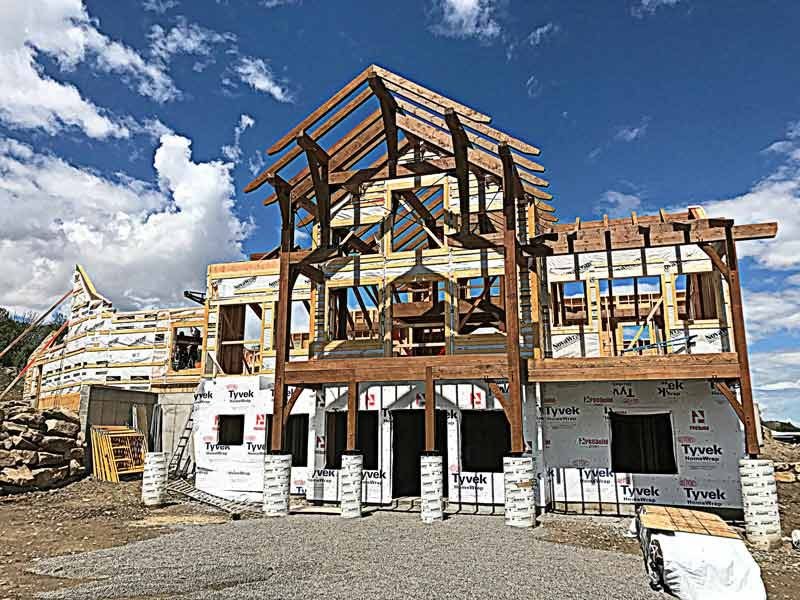
In the last few years, the innovation in the construction industry has really changed in several ways, especially innovation in prefabricated commercial construction in Colorado and modern prefab cabin homes. These approaches not only simplify the process of building but also sustain the aspect of enhancing value and flexibility in designs. Thus, with the increased awareness of the advantages of these methods among the business world and people, the demand for prefabricated structures is definitely on the rise.
What is Prefabricated Commercial Construction?
Prefabricated commercial construction is taken off-site to build various building components, which then are transported to the site for installation. Among the advantages of this method include the short time required in construction, saving on labor costs, and a more streamlined process at the site. Traditional construction work may encounter delays due to weathering and other unseen factors. With prefabrication, however, timelines can be better predicted; hence, this is of highest interest to business owners who wish to establish or extend their premises in efficient ways.
But aside from efficiency, prefabricated commercial construction also adopts the principles of sustainability. Many manufacturers use environmentally friendly materials and methods in the production of buildings. These products are both energy-efficient and environmentally conscious. Businesses are not exempt from being able to maximize on energy efficient products and a lower carbon footprint.
Therefore, with companies as key players in the industry always on top of their focus on sustainable practices, there is an increasing demand for modern prefabricated commercial construction that answers to this trend.
Modern Prefab Cabin Homes
Modern prefab cabin homes are slowly but surely gaining popularity as a desirable option for masses who look forward to having the contemporary design blended with that rustic touch. They offer efficient layouts, natural components, and rugged look. They cater to all lifestyles, whether a permanent residence, holiday home, or investment property.
One of the best attributes of prefab cabins in modern times is their ability to be customizable. Home buyers can have a choice of different designs, finishes, and layouts. This offers them a space that agrees with personal tastes. From compact one-bedroom retreats to expansive family cabins, modern prefab homes are used in bringing out either flexibility or adaptability according to individual needs.
SIP Construction: A Game Changer
SIPs or structural insulated panel construction is one of the most basic elements of a significant number of the newly designed prefab cabin homes. It’s a new form of building construction that makes use of panels consisting of an insulating foam core sandwiched between two structural facings, normally made of oriented strand board (OSB) or plywood. They provide excellent thermal performance so that their users benefit in saving energy.
The advantages of SIP construction extend well beyond the domain of energy efficiency. As panels are manufactured off-site, they save on construction time and waste. In addition to these strengths, SIPs possess excellent strength and durability and are very suitable for residential as well as commercial projects. Building and house owners are increasingly looking towards SIP construction for their projects as the demands of energy efficiency and the creation of sustainable infrastructure rises.
Why Choose Prefabricated Construction?
Here are some compelling reasons to consider prefabricated commercial construction or modern prefab cabin homes for your next project:
- Speed of Construction: Prefabrication reduces actual building time. Delays due to weather or site conditions are limited since parts are fabricated in a controlled factory environment.
- Cost-Effectiveness: With lower labor costs and fewer on-site interferences, prefabricated construction is a serious saver. Its efficiency in the processing and use of resources brings benefits to businesses and homeowners.
- Quality Control: Off-site production also allows rigid quality control standards, whereby every part meets specifications before leaving for the construction site. This efficiency is increased by fewer defects as a whole, as well as general quality.
- Sustainability: Prefab commercial buildings and modern prefab cabin homes can achieve high levels of sustainability. This is in terms of the use of eco-friendly materials, the energy efficiency of its designs and minimizing waste during the construction process.
- Design Flexibility: The current designs of prefab homes and buildings give a lot of flexibility as far as creativity is concerned. Owners and businesses are allowed by their prefab homes and buildings to match their purposes within one’s desired aesthetic. This can be through layout, finishes, and overall aesthetic, which is pretty much unlimited.
Future of Prefabricated Construction
The future of prefabricated construction will continue to rise with development in the construction industry. This is due to more people being cognizant of environmental issues, energy efficiency, and fast construction solutions. More commercial prefabricated buildings and prefab cabin homes will be used in the very near future, especially as the demand for energy efficiency increases.
Apart from innovative technologies in 3D printing and advanced materials, prefabricated construction is believed to become more productive by these advancements. It may eventually lead to further efficient processing of buildings, optimum design flexibility, and enhanced sustainability.
Conclusion
It certainly does not matter which the idea may be; prefabricated commercial construction, coupled with the latest prefab cabin homes, is truly a game-changer in the way we approach building design and construction. With all the advantages it holds-priority speed and cost effectiveness to a vast degree of sustainability. These methods are bound to change the face of the future of this industry.